
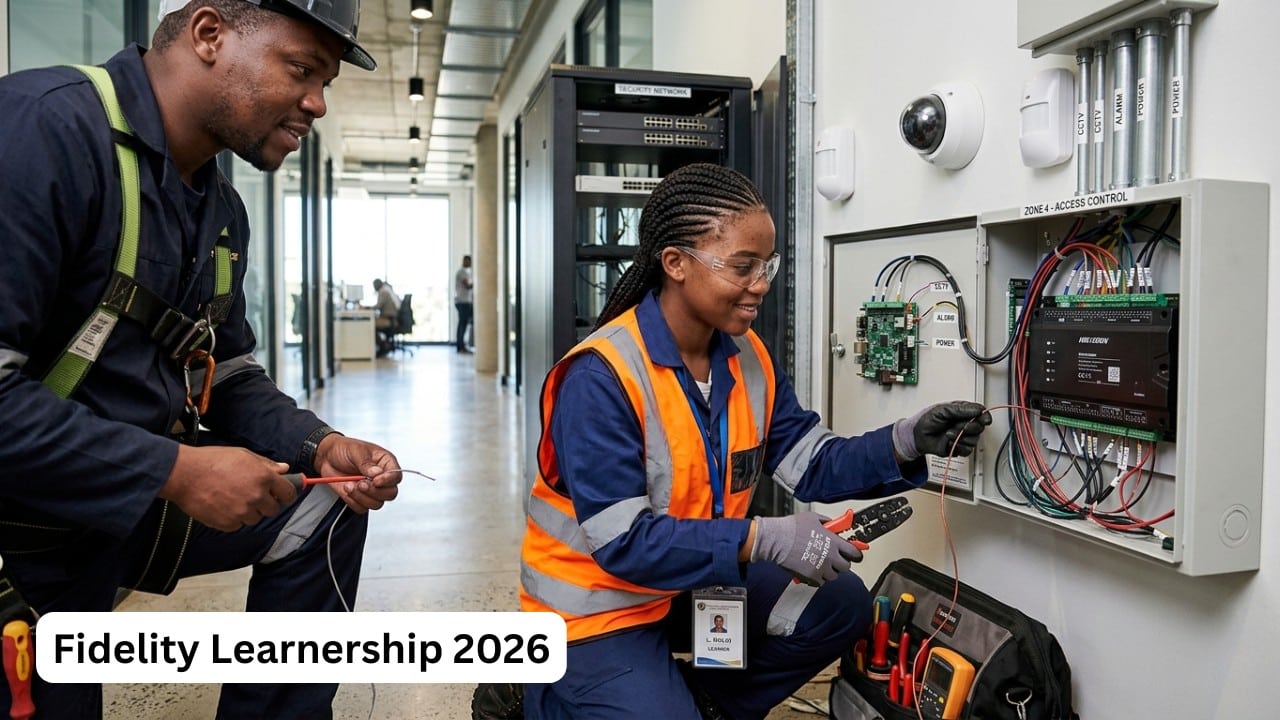
A new technical learnership in Gauteng could open the door to a fast-growing industry many young job seekers overlook. The Fidelity Services Group Electronic Installation Practices (NQF 4) Learnership Programme 2026 offers practical training, workplace exposure, and a nationally recognised qualification for candidates who want to build a future in electronic security and installation work.
Fidelity Services Group has opened applications for its Electronic Installation Practices (NQF 4) Learnership Programme 2026, offering unemployed South Africans a 12-month workplace-based training opportunity in Gauteng. The programme is aimed at young people aged 18 to 35 who want practical skills in alarm systems, CCTV, access control, and electronic security installation, with applications closing on 29 March 2026.
For many job seekers, technical careers feel out of reach.
Not because they lack ability.
Because they lack the first opportunity.
This learnership could be that first step.
For young South Africans who prefer hands-on work and want to enter the security technology industry, this programme offers a real route into a practical career path.
What is the Fidelity Electronic Installation Practices Learnership 2026?
This is a 12-month workplace-based learnership offered by Fidelity Services Group. It is designed to equip qualifying candidates with technical training and practical exposure while working toward a nationally recognised NQF Level 4 qualification in Electronic Installation Practices.
The programme combines:
- Classroom learning
- Practical training
- Workplace exposure
- Mentorship support
In simple terms, it is built to help beginners develop job-ready skills in electronic security installation and maintenance.
Why does this Fidelity learnership matter?
South Africa’s security and surveillance industry continues to create demand for people with practical installation and maintenance skills.
That makes this programme more than just another learnership.
It is a direct pathway into a technical industry with real-world demand.
Candidates who complete this type of training can improve their employability in both the private and public sectors, especially in roles linked to alarm systems, CCTV, access control, and electronic infrastructure support.
Where is the learnership based?
The programme is based in Gauteng, with placements expected in:
- Roodepoort
- Florida
- Helderkruin
- Midrand
- Surrounding operational areas in Gauteng
Placement will depend on operational needs and availability.
That means successful applicants should be ready to work in different branch or support locations if required.
What will learners study during the programme?
Over the 12-month period, learners are expected to gain exposure to key technical areas used in electronic security work.
Typical training may include:
- Alarm system installation
- CCTV setup and configuration
- Access control installation
- Wiring and connectivity systems
- Troubleshooting electronic faults
- System testing procedures
- Maintenance protocols
- Workplace safety compliance
This is the kind of practical training that helps turn interest into employable skill.
What work will learners do during placement?
Specific duties may depend on where you are placed, but learners will usually support installation teams with day-to-day technical tasks.
That may include:
- Assisting technicians during installations
- Preparing equipment and tools
- Following wiring layouts
- Supporting system configuration
- Maintaining installation records
- Performing testing procedures
- Observing safety protocols
- Assisting with maintenance tasks
This kind of structured exposure helps learners understand how real workplace operations function.
What skills can you gain from this programme?
The learnership is designed to build both technical ability and workplace readiness.
What technical skills will you develop?
Learners may build skills in:
- Cable routing techniques
- Alarm installation basics
- CCTV setup fundamentals
- Access control wiring
- Electrical safety awareness
- System troubleshooting methods
These are practical skills that can support long-term work in technical and security-focused environments.
What workplace skills will you develop?
The programme also helps learners strengthen important professional skills, including:
- Teamwork
- Workplace communication
- Reporting procedures
- Time management
- Task prioritisation
- Technical documentation
That balance matters because employers want people who can do the work and function well on a team.
Who should apply for this opportunity?
This learnership is ideal for unemployed youth who:
- Enjoy working with tools
- Are interested in electronics
- Want a technical career path
- Prefer practical work environments
- Want entry into the security industry
- Need skills training and workplace exposure
Even applicants without previous technical experience are encouraged to apply, which makes this a strong entry-level option.
What are the minimum requirements?
To qualify, candidates must meet the listed requirements.
What citizenship and education do you need?
Applicants must:
- Be a South African citizen
- Have a Matric certificate
What language and administrative skills are needed?
Candidates should also have:
- A strong command of English
- Organisational skills
- The ability to follow procedures
- Attention to detail
What communication and personal qualities does Fidelity want?
Fidelity is looking for candidates who show:
- Interpersonal confidence
- Professionalism when dealing with staff
- Ability to work in teams
- Motivation
- Enthusiasm
- Reliability
- Discipline
- Ability to follow instructions
- Ability to work under pressure
These qualities matter because installation work often requires teamwork, precision, and discipline.
Is there a criminal record screening requirement?
Yes.
Because Fidelity Services Group operates in the security sector, all applications are subject to criminal background checks.
Applicants should make sure their records are clear before applying.
This is one of the most important details in the entire advert.
What documents do you need to apply?
Before sending your application, prepare the following:
- Updated CV
- Certified copy of ID
- SARS document
- Certified Matric certificate or other qualifications
Applications with missing documents may not be considered, so it is best to double-check everything before sending.
How do you apply for the Fidelity Services Group Learnership 2026?
Applications must be submitted by email.
Send your documents to: philippines@fidelity-services.com
Use a clear subject line such as:
Electronic Installation Practices Learnership Application 2026
Make sure your documents are attached properly and sent before the deadline.
What is the closing date?
The closing date is:
29 March 2026
That is soon.
Late applications may not be reviewed, which means early submission is the safer move.
Is this Fidelity learnership worth applying for?
Yes, especially for candidates who want a practical starting point in a technical field.
This opportunity offers structured workplace exposure, hands-on learning, and a recognised qualification in an industry where technical installation skills are valuable. For unemployed youth in Gauteng who want to enter the security technology space, this could be a smart first move.
Not every opportunity gives you skills, workplace exposure, and a qualification at the same time. This one does.
Grow Your Career with SETACareers
Access the latest learnerships, internships, bursaries, apprenticeships, and practical SETA guides designed to help you succeed.
Final Thoughts
The Fidelity Services Group Electronic Installation Practices (NQF 4) Learnership Programme 2026 is a strong opportunity for unemployed young South Africans who want to build a technical future in Gauteng. It offers practical training, real workplace exposure, and a nationally recognised qualification in a growing industry.
For candidates who enjoy electronics, tools, and hands-on problem-solving, this could be the opportunity that opens the door.
